Developing and organizing the community-driven workshop FDM-Werkstatt
1. IntroductionIntroduction
The community workshop FDM-Werkstatt was developed as a new format by the state initiative for research data management (RDM) in North Rhine-Westphalia (NRW), fdm.nrw, in cooperation with the RDM community. The event has been held yearly since 2023. The name consists of two parts: the German acronym for RDM1 and the word Werkstatt, which refers to a place equipped with the tools needed to work, create and repair2. The FDM-Werkstatt offers a space for people interested in RDM to work with and on tools (usually software and code) used in the handling of research data. This format is truly community-driven, from the initial idea to the execution of the individual sessions. As a prime example of the cooperative community work of fdm.nrw, the FDM-Werkstatt invites participants to engage with the tools of RDM in a format suited to their specific needs. It attracts people beyond the RDM community in NRW and has since inspired the development of other formats. Since 2024, this event has been organized in cooperation with local RDM service centers and other RDM initiatives located at the hosting universities: In 2024 with the IT Center of RWTH Aachen University and the Rhine-Ruhr Center for Scientific Data Literacy (DKZ.2R)3, and in 2025 with the University of Münster, the University and the State Library (Universitäts- und Landesbibibliothek, ULB) of Münster and NFDI4BIOIMAGE4. This report lays out how this format was developed, how the hosting universities contributed to and benefited from the event and how the FDM-Werkstatt inspired new ways of community-involvement in NRW.
2. Developing a new format for and with the RDM communityDeveloping a new format for and with the RDM community
The work of the state initiative fdm.nrw is based on networking, exchange and cooperation between RDM employees at universities in NRW. The RDM community consists of people working in libraries, computer centers and departments for research funding, who are active in the field of RDM and support researchers in implementing RDM practices. With its long-standing, target-group-oriented community work (i.e., working groups, events and trainings), fdm.nrw has created a sense of belonging among RDM employees throughout the state. To enhance access, most meetings and events take place in the digital space; the FDM-Werkstatt forms a counterpoint to this. As a three-day face-to-face event it gives participants several incentives to meet on site where they can focus on working with RDM tools and exchange ideas in an informal setting.
The RDM community has been involved in this format from the beginning. The team of fdm.nrw initially intended to organize a community-driven hackathon.5 To align this idea with the needs and wishes of the target group, an online meeting was held in spring 2023 in which a draft of the hackathon concept was presented and discussed with interested members of the RDM community. Based on the feedback, the idea was ultimately dismissed and instead a format was developed in which participants can work on and with RDM tools in a practical way, but under guidance. In addition to the substantive sessions, which last several hours and are designed and conducted by the community for the community, the format also fosters networking and collegial exchange among participants.
Excursion 1: The state initiatives’ experiences of the first FDM-Werkstatt | Essen, 2023
The first FDM-Werkstatt was held in June 2023 at the KWI6 in Essen. A Call for Participation invited the community to submit abstracts for sessions to be held at the FDM-Werkstatt. Almost 30 participants were able to work collaboratively on GitLab, Coscine and DataLad in a total of six sessions. The registration form queried the participants’ interest in the topics of the submitted abstracts. Based on this, a program was created and rooms were allocated. During the event, the participants were also invited to decide spontaneously between the two simultaneously held sessions, which was a well received format. The non-binding query of the participants’ interests during registration is a compromise, enabling predictability on the one hand and flexibility to be spontaneous on the other. The evaluation of the event already showed the potential for further development. Participants praised the opportunity for networking and the pleasant atmosphere. The duration of the event as a whole was received positively; however, the duration of the individual sessions proved to be too long and was shortened to two or three hours. Overall, the event was perceived as appealing and helpful, not least due to the hands-on focus on RDM tools.
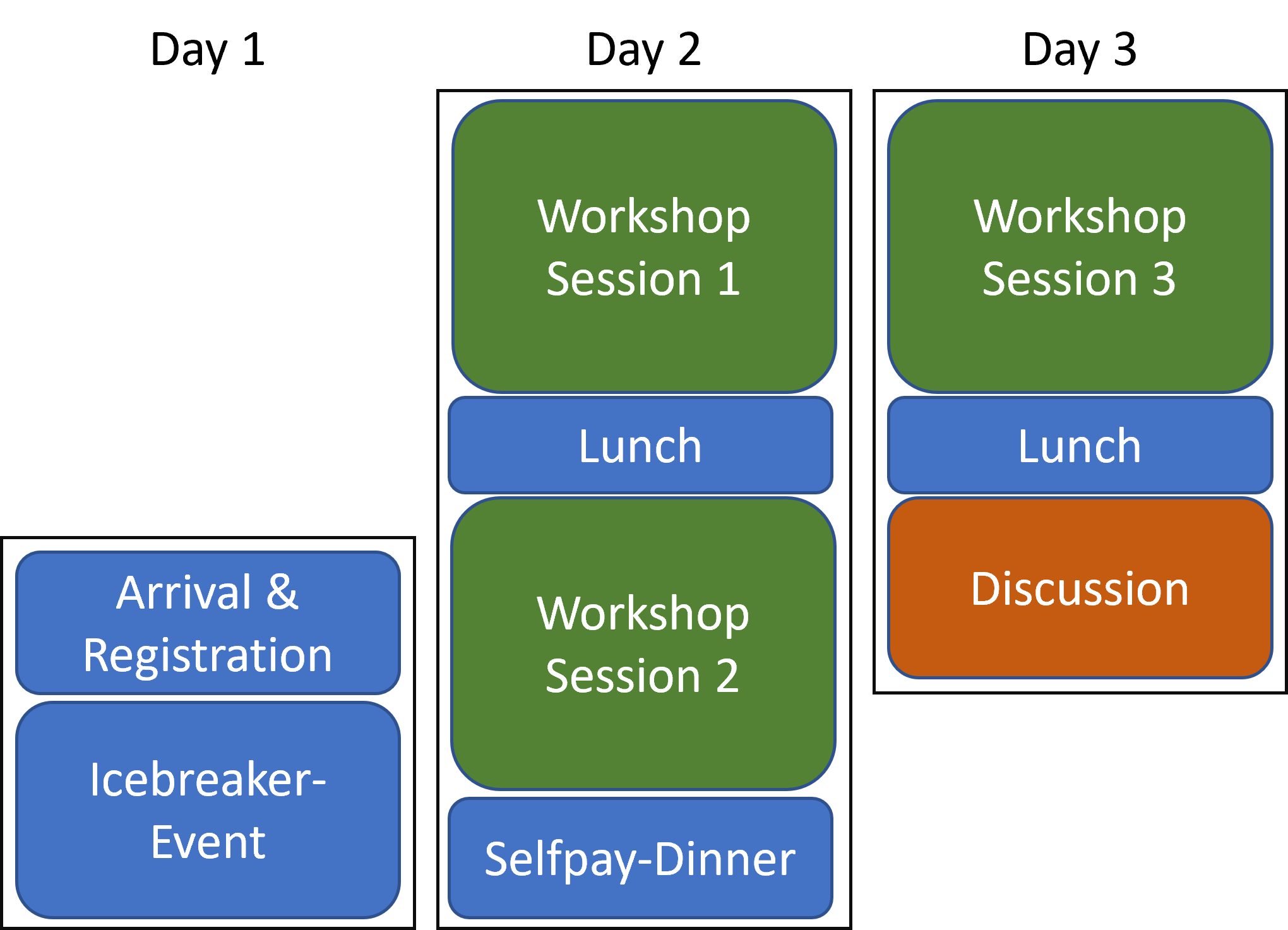
Fig. 1: Chart of the FDM-Werkstatt program with time slots for networking (blue), for hands-on sessions (green) and for the final discussion (orange). Source: Magdalene Cyra-Wolf
After its first successful run, it was quickly decided to offer the FDM-Werkstatt regularly and to do so in cooperation with the RDM community at various locations in NRW. The experiences and feedback provided by the participants were used to further develop the format of the FDM-Werkstatt. The target group now encompasses everyone working in RDM who wants to share, develop, and deepen their knowledge of technical RDM solutions. A Call for Participation invites the community to submit abstracts for a session they would like to hold or have at the event. In addition to the abstract describing the session, they are now also asked to provide information on required skills and software installations needed to participate. This information is later provided on the event webpage to support members of the community in selecting sessions suitable and relevant to them. Session hosts are instructed to start their session with a brief presentation and then focus on working collaboratively on the RDM solutions. The overall structure of the event still provides opportunities to network outside these sessions, starting with an icebreaker event on day one, ample breaks, and an optional self-pay dinner on day two. A final discussion has been added to the program to round off the event on the third day. This program is supplemented by interactive posters, postcards, program booklets and little gimmicks to support the informal exchange among participants and organizers. To keep the language barrier as low as possible, only the name of the event remains in German; all further communication takes place in English. The sessions themselves can be held in German or English as required.
3. The FDM-Werkstatt as a collaboratively organized eventThe FDM-Werkstatt as a collaboratively organized event
There are several reasons why the FDM-Werkstatt became the first collaboratively organized event by fdm.nrw. First and foremost, the format, with its practical focus on RDM tools, filled a need within the community. The selection of tools available to plan, organize and work with research data is continuously growing.7 Due to simultaneous developments of new tools, the RDM community is regularly confronted with questions regarding the selection of tools to recommend and their interoperability. The FDM-Werkstatt offers a space to address such questions and to engage with new developments in the field. Secondly, the first FDM-Werkstatt was a success, as participants were satisfied with their experience and the results. The first run being a success matters to the format becoming a collaborative format, because participants could envision themselves running an event of this type. Adding this imaginative ability to the previous point creates the preconditions for members of the RDM community to want to take responsibility in actively creating an event for the community in collaboration with fdm.nrw. Thirdly, as an on-site event of three days, the resources necessary to organize the FDM-Werkstatt are extensive. This includes financial resources as well as personnel with varying expertise. By creating organizing teams consisting of employees of fdm.nrw and the hosting universities, these resources are pooled. This team works closely together for roughly six months, which strengthens the relationship between the partners and enables them to learn from each other in the process. Finally, there are mutual benefits in hosting such an event together, ranging from a wider target-group which can be reached collaboratively to an increase of the hosts’ visibility within their own university and the RDM community.
Excursion 2: The IT Center’s experiences of the second FDM-Werkstatt | Aachen, 2024
The second FDM-Werkstatt showed how far-reaching the added value of an open workshop format with a focus on the technical infrastructure and tools for RDM can be. From March 18 to 20, 2024, more than 50 participants came together at the IT Center of RWTH Aachen University to exchange ideas on practical methods, tools, and questions according to the motto “Into the RDM Toolbox”. The event was organized by staff of the IT Center, which included members of its event and marketing team, fdm.nrw and the DKZ.2R.
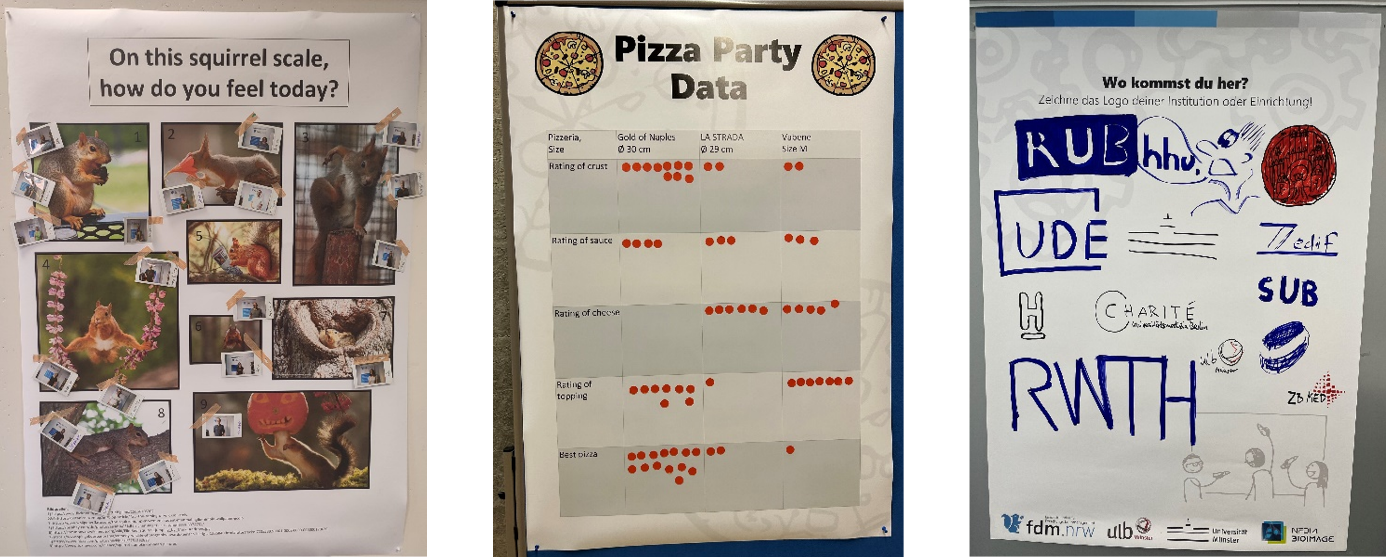
Fig. 2: Examples of interactive posters from 2023, 2024 and 2025. Source: Lioba Schreyer
As an icebreaker event, the IT Center presented the AixCave and its high-performance computers. The AixCave is a five-sided virtual reality installation that creates an immersive experience for representing virtual environments. This experience immediately sparked conversation and opened the event with an inspiring atmosphere. During the subsequent catering at the pizza buffet, the topic of RDM was taken up in a playful way: The participants awarded points for the different types of pizza, which resulted in a small data collection (see figure 2). This not only served as the basis for the evaluation of the most popular variant, but also clearly illustrated how even simple surveys can be structured, documented and used for a joint analysis. In this way, culinary enjoyment was combined with a practical introduction to the world of data management.
The content of the sessions on the following days ranged from practical introductions to RDM and structural methods for organizing data to technical applications such as electronic laboratory notebooks (ELN), web-based programming environments or the design of interactive websites. A key added value resulted from the direct networking of development teams and users. For example, the connection of the research data platform Coscine8 to the DataLad data management system was intensively discussed. This exchange not only led to a better understanding of current hurdles, but also showed how quickly concrete impulses were absorbed. During the event, the approach of metadata storage in SHACL9 format was found so convincing that a new annotation editor in DataLad emerged directly from it.
The open discussion format at the end of the event also helped to make the needs of researchers visible and to further develop target-oriented services. A Q&A and discussion session was initiated and chaired by the DKZ.2R. After the presentation of DKZ.2R, the aim was to find out which services and topics a data competence center can offer to support researchers and whether the services provided already cover the demand. At the same time, Coscine offered a technical “Ask me anything” in which participants could ask their questions directly to Coscine’s development team.
The FDM-Werkstatt in Aachen was a success. The participants emphasized both the practical relevance and the beneficial discussions in their feedback to the event. The exchange between operational RDM personnel and developers is equally inspiring and motivating, especially from the point of view of the local organizers. More than a year after the event, the FDM-Werkstatt is still having an impact: Inspired by the success of the individual sessions and the great demand, the range of training courses and workshops at RWTH was expanded.10
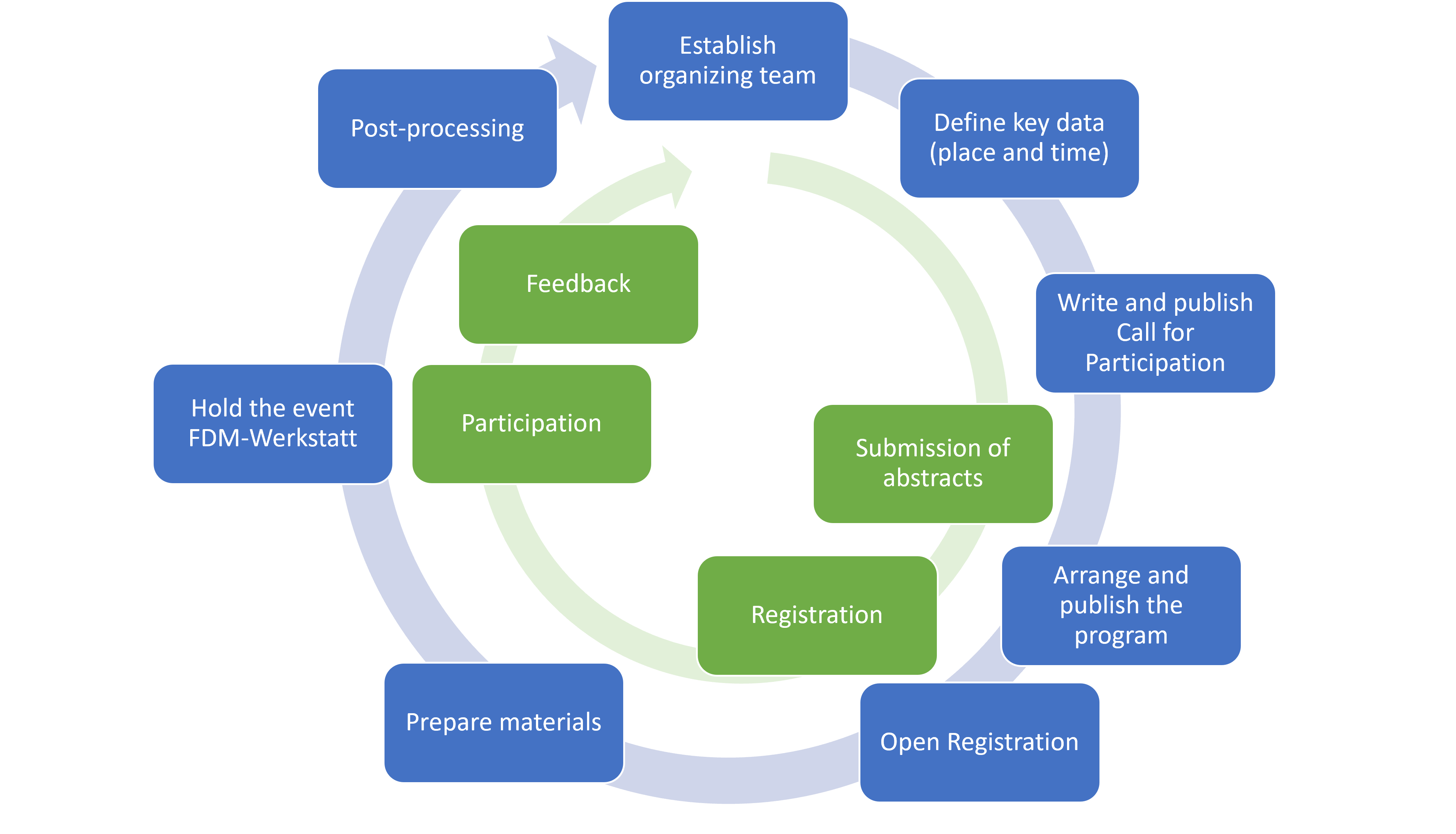
Fig. 3: The diagram outlines the cyclical process of organizing the FDM-Werkstatt with internal milestones (blue) and milestones involving the community (green). Source: Magdalene Cyra-Wolf and Lioba Schreyer
Following the second FDM-Werkstatt, the processes and roles within the organization team have been formalized. The state initiative fdm.nrw structures the organization and coordinates the participant management. To ensure continuity, they also contribute results from the evaluation and experiences of the previous event. Organizing suitable rooms, a guided tour as part of the icebreaker event and catering can best be done at the local level, so these tasks are taken over by the partners of the hosting university. Decisions regarding the content of the Call for Participation or the webpage are made jointly. Both the call and the event are promoted by all partners in order to reach not only the RDM community in NRW, but also other RDM-interested members of the hosting university and the third partner.
Excursion 3: ULB’s experiences of the third FDM-Werkstatt | Münster, 2025
From March 31 to April 2, 2025, the ULB Münster hosted the third FDM-Werkstatt under the motto “Tools of the Trade”, with around 50 participants from all over Germany. This year’s organizing team consisted of the ULB, namely the Service Center for Data Management (SCDM), which is located there, as well as fdm.nrw and the NFDI consortium NFDI4BIOIMAGE. The SCDM, which has been coordinating the development and expansion of consulting and service offers related to research data management at the University of Münster since 2022, contributed its technical expertise and local knowledge to shaping the workshop. Local cooperation partners of the SCDM, such as the Münster Center for Open Science (MüCOS) and the Service Center for Digital Humanities (SCDH), also contributed by organizing their own as part of the FDM-Werkstatt.
At the start of the event, the participants were given insights into modern imaging methods at the Multiscale Imaging Centre (MIC) in small groups by employees of the third organizing partner NFDI4BIOIMAGE. The MIC also provided the impressive backdrop for the evening’s icebreaker event on the first day: over manakish (“pizza” from the Levant region), hummus and local soft drinks, the participants took the opportunity for informal exchange. In addition to the opportunity to talk to each other and meet new people, this introduction to the event was also used to coordinate organizational details. The sessions on the following days, held in the Torhaus of the University of Münster, then covered a wide range of practical topics: from data-driven visualizations with the typesetting system LaTeX, first steps with InvenioRDM and adapting metadata structures in eLabFTW, data preparation with OpenRefine, insights into the ELN format for improved interoperability of ELN, and the opening of research projects using the Open Science Framework and GitHub. On the second day of the workshop, the topics ranged from the ARCification of research projects and the integration of the OMERO.iviewer in eLabFTW to the visualization of networks using Wikidata, Gephi and Inkscape.11 Finally, the participants discussed how RDM services can be better designed in a user-oriented way and made more visible. The variety of topics enabled participants to set individual priorities, whether that is learning new tools, deepening specific methods or exchanging ideas on strategic RDM issues.
The workshop provided an opportunity to present local structures and promote cooperation between the ULB, the team of NFDI4BIOIMAGE and researchers from the University of Münster. In addition, cooperating with fdm.nrw further strengthened regional ties and positively influenced the external perception of the University of Münster. Many participants appreciated being able to work directly on their own projects and took away concrete solutions to current challenges.
The FDM-Werkstatt provided the SCDM with valuable impetus for the further development of its own services: discussions with participants revealed which challenges researchers are particularly concerned with when dealing with research data and which forms of support should receive greater attention in the future. These findings provided new objectives for the further development of university RDM services. The feedback also made it clear that practical formats and collegial exchange are particularly appreciated, an insight that can be incorporated into the design of future offers.
In retrospect, it became clear that events such as the FDM-Werkstatt can make RDM activities at the university more visible, promote local cooperation, and reach new target groups. In particular, the community-led approach, with topic suggestions and expertise coming from the participants, proved to be a great benefit. Thanks to the support of the entire team and the financial and organizational contributions of the partners, the implementation went mostly smoothly.
4. ConclusionConclusion
The need for hands-on formats with a technical focus in RDM is reflected in the interest in and feedback on the FDM-Werkstatt. This innovative format enables RDM personnel to actively engage with and be personally involved in the development of RDM tools. Furthermore, it has benefits for all partners organizing such an event. For all of them, the FDM-Werkstatt results in new cooperations and formats. Being the host institution of an FDM-Werkstatt means being a mainstay in the RDM community. The institutions are perceived as competent partners in RDM within their universities and as important locations among relevant agents in RDM from NRW and beyond. Likewise, the state initiative fdm.nrw expands its target audience with the FDM-Werkstatt because of this collaborative approach.
Following the success of involving the community in the development of this format, the state initiative fdm.nrw integrated community involvement into their developmental processes of new concepts. The “Feedback-Forum”, a new format introduced in 2025, provides a framework to present and discuss concepts within their target group. Feedback is processed, shared, and used in the further development of the concepts.
Because the format of the FDM-Werkstatt and its collaborative organization have repeatedly been successful, other universities in NRW are interested in becoming hosts of this event. Across the series of FDM-Werkstatt events, fdm.nrw is responsible for continuity, which eases the organizational processes and ensures that participants’ expectations will be met. Within the given framework, each partner introduces changes, by designing sessions which emphasize local interests and expertise, by presenting themselves and their universities to the RDM community, and by bringing in local flavors, often literally through conscious choices made when compiling the catering for the event. The FDM-Werkstatt benefits from the experiences and perspectives of new partners as much as from the participants’ feedback. This way, the format can maintain its relevance and innovative character with each iteration.
Acknowledgments
Lukas C. Bossert would like to thank the Federal Government and the Federal Ministry of Research, Technology and Space for their initiative within the framework of the Data Literacy Centers, specifically the Rhine-Ruhr Center for Scientific Data Literacy, project number 16DKZ2030E.
Notes
1 Research Data Management (RDM); German: Forschungsdatenmanagement(FDM).
2 The German word “Werkstatt” can be translated as workshop or garage; however, “Workshop” is used in German to refer to interactive event formats or trainings exclusively and therefore lacks the spatial metaphor chosen to characterize this event.
3The Rhine-Ruhr Center for Scientific Data Literacy (DKZ.2R) is one of eleven Data Literacy Centers in Germany and was founded in 2023. For further information see https://www.dkz2r.de, last accessed: 02.12.2025.
4 NFDI4BIOIMAGE, a consortium of the German National Research Data Infrastructure (NFDI), focuses on data management for bioimaging and bioimage analysis. For more information see https://nfdi4bioimage.de, last accessed: 02.12.2025.
5 A hackathon is an event format in which developers meet for collaborative computer programming.
6 The KWI (Kulturwissenschaftliches Institut Essen) is an interdisciplinary, inter-university research college of the University of Duisburg-Essen, the Technical University of Dortmund and the Ruhr University Bochum. The KWI was chosen as the venue because the premises were appropriate and also available during the lecture period. In the following FDM-Werkstatt events, care was taken to choose a date during the lecture-free period.
7 Three developments contribute to this: Within the German Nationale Forschungsdateninfrastruktur (NFDI), RDM-solutions are being developed by researchers across many disciplines. Additionally, the state of NRW has developed a strategy to build state-wide infrastructures supporting researchers in how they engage with their research data and encouraging them to follow the FAIR Principles. Outside these structures, research groups develop individual solutions to needs occurring in their projects.
8 The research data management platform Coscine can be used by all universities in NRW as a NRW state service for the administration and storage of research data. For more information see https://coscine.de, last accessed: 20.11.2025.
9 SHACL stands for “Shapes Constraint Language” and is a language for defining rules about how data in a knowledge graph should look, and for checking whether the data follows those rules.
10 Since then, at least one workshop takes place every month, organized and conducted by certified instructors according to the didactic method of “The Carpentries” (https://carpentries.org/, last accessed: 03.12.2025). The portfolio covers a wide range of topics like an introduction to Unix Bash or git and GitLab, or LaTeX.
11 The RDM tools of this FDM-Werkstatt covered a wide range of functionalities specific to the context of RDM: Invenio is an open-source platform for setting up institutional research data repositories, where researchers can store and publish datasets. For further information see https://inveniosoftware.org/, last accessed: 03.12.2025. eLabFTW is a web-based electronic lab notebook used to document experiments and manage lab and experimental data. For further information see https://www.elabftw.net/, last accessed: 03.12.2025. OpenRefine is a free tool for cleaning, correcting and restructuring data sets. For further information see https://openrefine.org/, last accessed: 03.12.2025. ARC stands for “Annotated Research Context”, a structured way to bundle all data, metadata and workflows of a research project so they follow the FAIR-principles. For further information see https://arc-rdm.org/, last accessed: 03.12.2025. The session on the ARCification of research projects introduced way to organize data and documentation according to the ARC format. OMERO.iviewer is a browser-based viewer for large, multi-dimensional microscopy images that allows zooming, annotation and basic analysis. For further information see https://omero-guides.readthedocs.io/en/latest/iviewer/docs/, last accessed: 03.12.2025. Gephi is open-source software for exploring and visualizing complex networks such as citation or collaboration graphs. For further information see https://gephi.org/, last accessed: 03.12.2025. Inkscape is a free vector-graphics program used to design and edit diagrams and illustrations at high quality. For further information see https://inkscape.org/, last accessed 03.12.2025.